


Coconut Holige is a delicious traditional Indian sweet made with a soft, lightly elastic dough and a flavourful coconut-jaggery filling. Also known as coconut obbattu, this popular Karnataka sweet recipe is loved for its soft texture, rich coconut flavour, and gentle sweetness.
This homemade sweet flatbread is prepared by stuffing a coconut and jaggery mixture inside a thin layer of dough and cooking it on a hot pan until golden patches appear. The combination of coconut, jaggery, cardamom, and ghee makes this coconut jaggery poli wonderfully aromatic and satisfying.
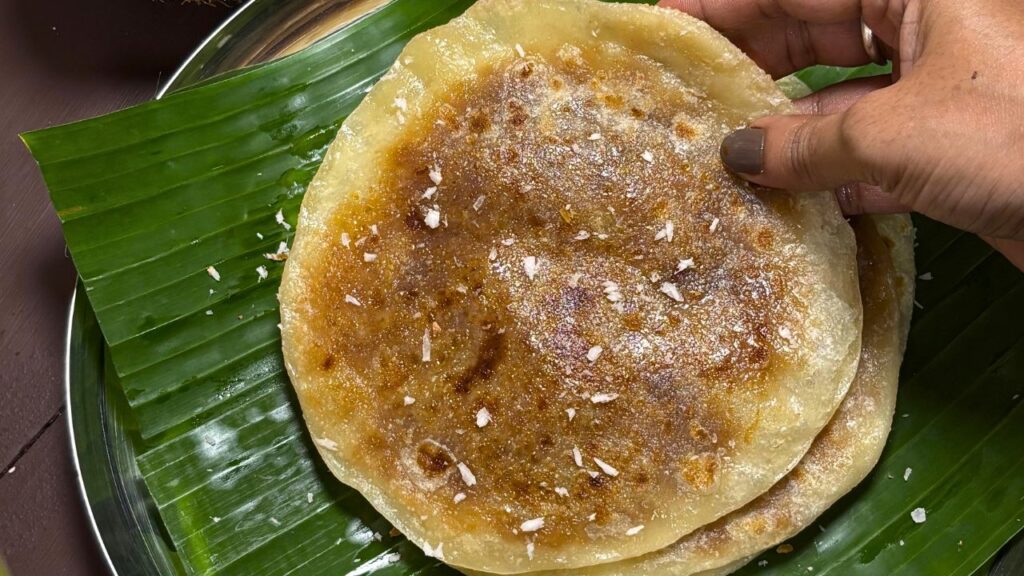
Coconut Holige, or coconut obbattu, is a traditional sweet flatbread popular in Karnataka and other parts of South India. It is similar to other varieties of Puran poli and holige, with the main difference being the filling used.
For this version, freshly grated coconut is combined with jaggery and cardamom to create a sweet, fragrant filling. The filling is cooked briefly with ghee and then shaped into small portions before being stuffed into the dough.
This Karnataka sweet recipe uses simple ingredients that are easily available in most kitchens. The combination of coconut and jaggery gives the filling a naturally rich and caramel-like sweetness, while cardamom adds a beautiful aroma.
The dough is made with all-purpose flour, rava, salt, water, and oil. Resting the dough helps make it soft and easy to stretch, which is important when preparing holige.
Another special part of this recipe is the use of a banana leaf while shaping the holige. It makes spreading the dough easier and adds a traditional touch.
The dough requires all-purpose flour, rava, salt, water, and oil. The oil helps create a soft and pliable dough that can be stretched around the filling.
For the filling, freshly grated coconut is combined with jaggery and cardamom powder. A little ghee is used while cooking the filling, adding richness and aroma.
Ghee is also used while cooking the holige and can be added on top before serving.
The filling is the heart of this traditional holige recipe. Fresh coconut provides a pleasant texture and nutty flavour, while jaggery adds deep sweetness.
Cardamom powder balances the sweetness with its warm aroma. Cooking the mixture with a little ghee helps bring the ingredients together and makes the filling easier to shape.
The filling should be cooked until it thickens enough to form small balls. Allow it to cool completely before stuffing the dough.
The dough should be soft, not stiff. All-purpose flour and rava are combined with salt, followed by water added gradually.
Once the dough comes together, oil is added and incorporated well. Allowing the dough to rest gives it a softer, more manageable texture.
A well-rested dough makes it easier to spread the holige without tearing.
Take a small portion of the dough and gently spread it over a greased banana leaf. Place a portion of the coconut-jaggery filling in the centre.
Bring the edges of the dough over the filling and seal it completely. Gently flatten and spread it with your fingers until you get a thin, round shape similar to a roti.
Be gentle while spreading so the filling stays enclosed inside the dough.
Heat a pan over medium heat. Place the banana leaf upside down on the hot pan and gently release the flattened holige onto the pan.
Cook until golden patches appear on the underside, then flip and cook the other side. Apply a little ghee while cooking for extra flavour.
Once both sides are cooked and lightly golden, remove the holige from the pan. Serve warm with a little ghee on top.
This sweet Holige tastes especially delicious when served warm. A little ghee spread over the top enhances its flavour and gives it a lovely aroma.
It can be enjoyed as a festive sweet, evening treat, or traditional homemade dessert. Serve it on its own or pair it with warm milk for a comforting combination.

Use freshly grated coconut for the best flavour and texture. Make sure the filling is not too moist, as excess moisture can make the holige difficult to shape.
Allow the filling to cool before stuffing. A soft, well-rested dough is also essential for spreading the holige without breaking it.
Cook the holige over medium heat so that the dough cooks evenly without burning the surface.
Add all-purpose flour, rava, and salt to a bowl; gradually add water and knead to form a soft dough. Pour in the oil and let the dough rest for 30 minutes.
In a grinding jar, add grated coconut, jaggery, and cardamom and grind well. In a pan, add ghee and transfer the ground coconut mixture; stir and cook the mixture until the mixture thickens and becomes easy to shape into balls. Allow to cool and make small balls out of it and set aside.
Take a small portion of the dough and gently spread it on a greased banana leaf. Place the coconut filling in the center and cover the dough around the filling on all sides; flatten it with your fingers and spread to the size of a roti.
Place the banana leaf upside down on the heated pan and gently release the holige from the leaf. Flip and cook until golden patches appear on both sides; spread ghee on both sides and cook until crispy. Once done, remove from pan and serve with ghee on top.